One of the first questions we hear is what a custom home costs. It is a fair question, and the honest answer is that it depends, sometimes by a lot. Two homes with the same square footage can end up far apart on price, and the reasons are almost always the same handful of things.
Start with the lot. Two parcels in the same neighborhood can need very different amounts of work before a foundation goes in. Slope, soil, drainage, tree removal, and how far power, water, and sewer have to travel all add cost, and none of it shows up in the size of the house. A flat lot with utilities at the street is a different project from a hillside lot that needs engineered foundations and retaining walls.
Next is the shape of the home itself. Size matters, but complexity matters just as much. A simple footprint with a straightforward roofline costs less to build than a home with multiple levels, long spans, large areas of glass, or a lot of changes in direction. Square footage tells you how much house there is. It does not tell you how hard the house is to build.
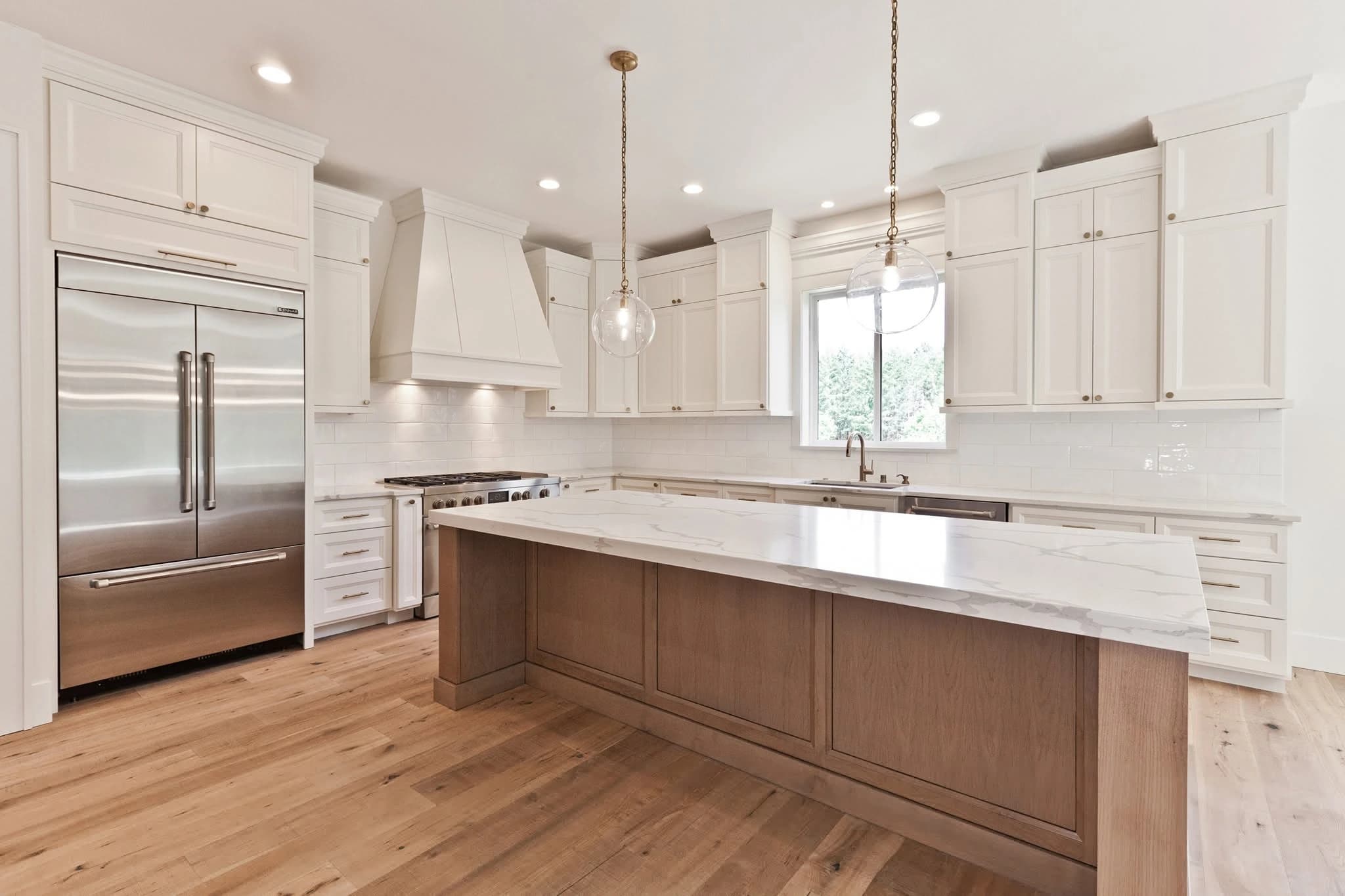
Then come the finishes and systems. Cabinetry, stone, flooring, windows, lighting, and plumbing fixtures can each be chosen across a very wide range, and in a custom home those choices add up quickly. The same goes for what sits behind the walls, such as heating and cooling, ventilation, and electrical. Two kitchens of the same size can differ by a large amount depending on what goes into them.
There are also costs that are easy to forget because they come before and around the build itself. Design, engineering, surveys, permits, and utility connections are part of the total, and so is a contingency for the things nobody can see until the ground is open. A budget that leaves these out will look better on paper than it does in real life.
This is why we are careful about quoting a number without a lot and a set of plans. Any figure given before then is a guess, and a guess can send a family down the wrong path. What we can do early is help you understand which of these factors will matter most for your project, and where there is room to adjust if the budget needs to move.
The best way to get a realistic number is to settle the big decisions early. When the lot is understood and the design, materials, and systems are chosen before construction starts, the number you plan around is much closer to the number you spend. If you are thinking about building, we are glad to talk through what that looks like for your situation, even before you have a lot.