Custom Home Builder in Ridgefield, WA
Ridgefield sits in northwest Clark County, and a good project here starts with understanding the lot.
Building in Ridgefield
Zaboss Concepts is based in Vancouver, Washington, and Ridgefield is part of the Clark County area we know best. We build ground-up luxury custom homes as a design-build firm. We partner with an independent architect on the design and manage the construction directly, from the first drawing to the final walkthrough.
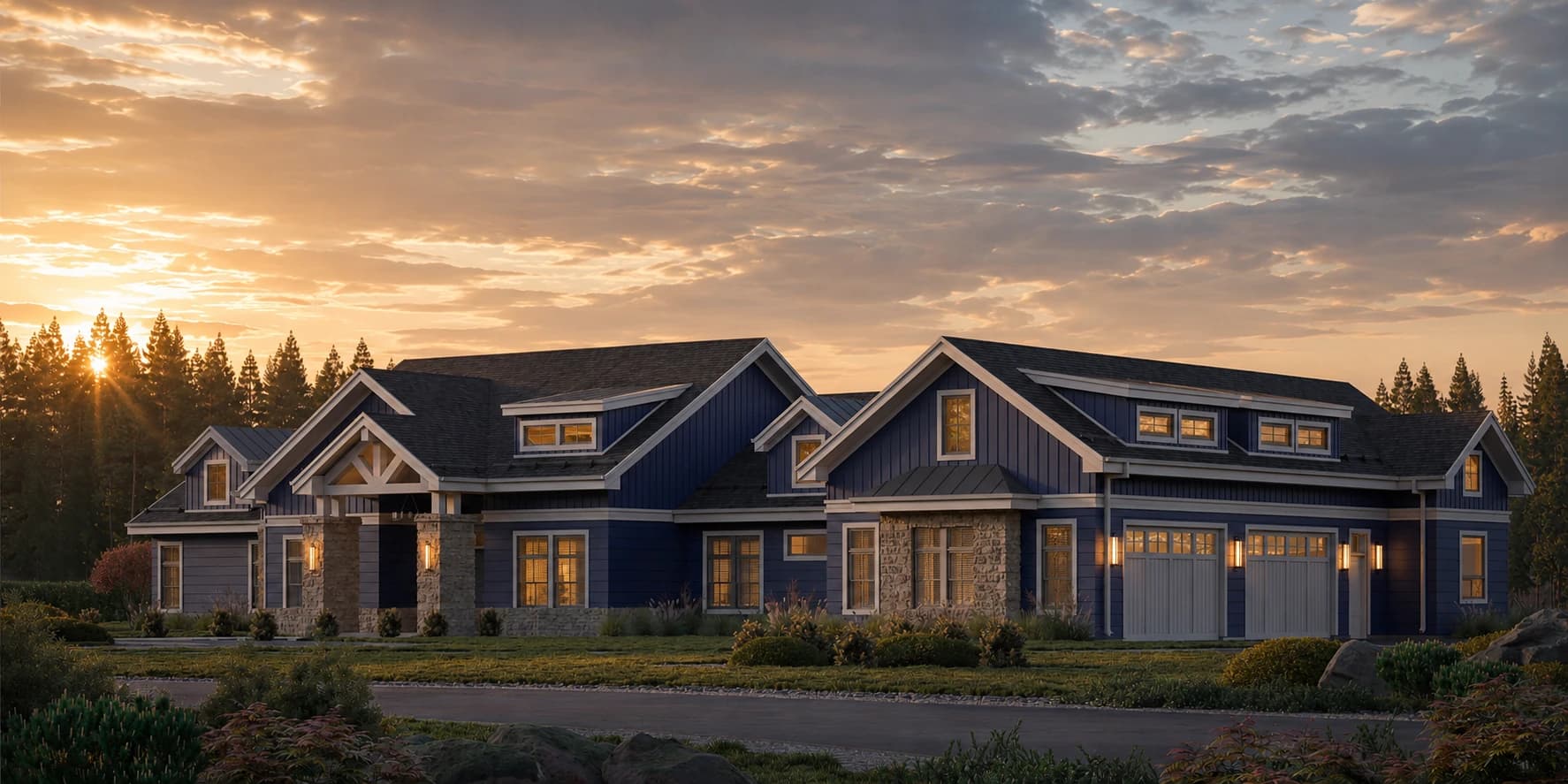
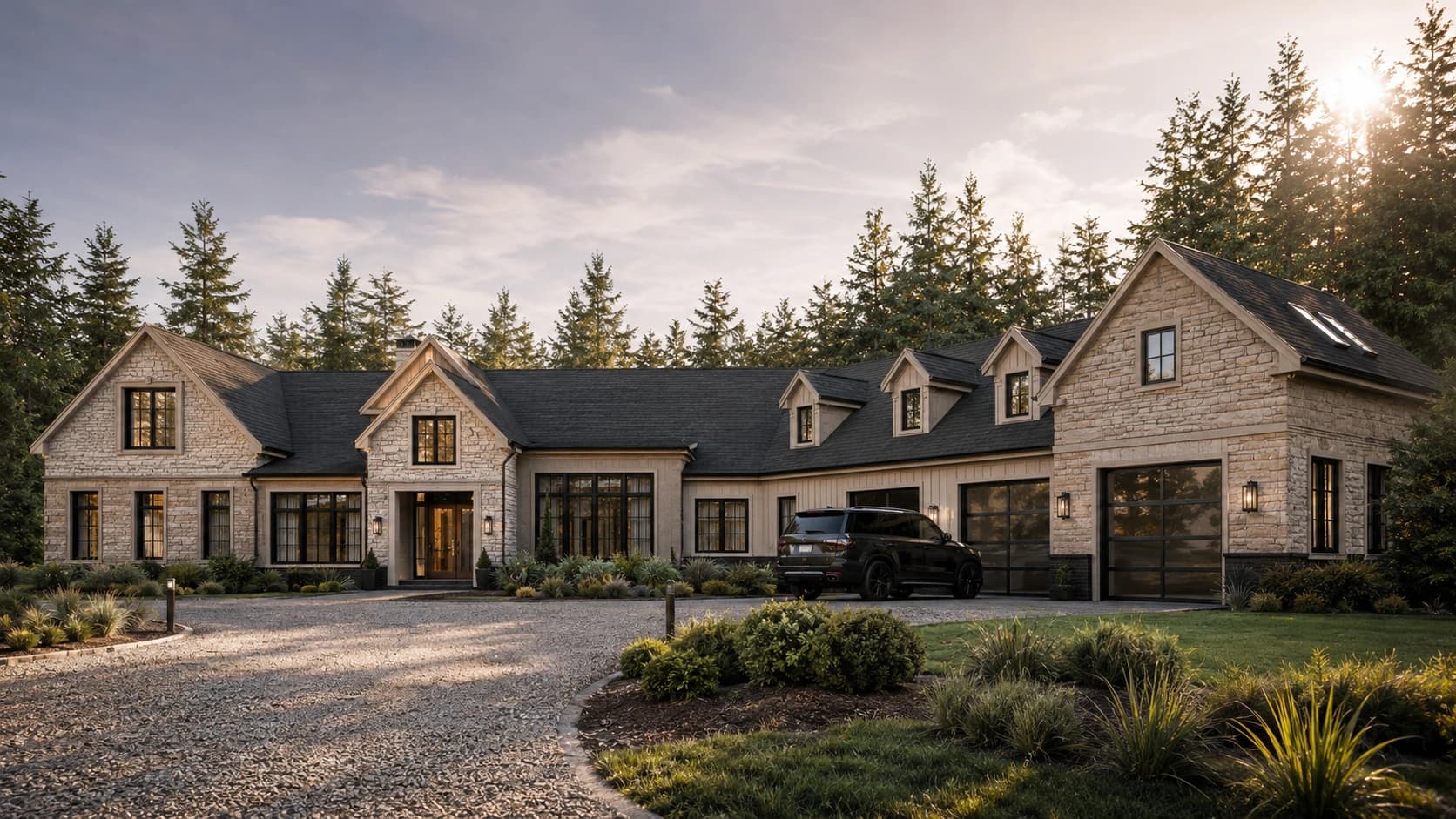
We do not have a project inside Ridgefield to show you. Our nearby Clark County work, Eastfork in Battle Ground and Château Crest in Hockinson, is shown below so you can see the standard we hold. Both are on larger lots.
Ridgefield offers a mix of settings, from established streets to newer neighborhoods to acreage at the edge of town. Each comes with different questions about utilities, drainage, and what the land will and will not allow, and we answer those before we design anything.
Permits: the city or the county
The first question on any Ridgefield lot is whether it sits inside city limits. Inside the city, permits go through the City of Ridgefield, which has its own application and checklist for new single-family homes. Outside it, they go through Clark County. The two have different forms, different staff, and different timelines.
The city's checklist asks for a plot plan, and setbacks are checked through that plot plan before a building permit is issued. It also requires a Washington State Energy Code compliance form for a new house. Electrical permits come from the Washington State Department of Labor and Industries, and mechanical and plumbing work carry their own permits and inspections.
When a project also needs land use approval, the city allows the land use, public works, and building applications to be filed together. It will not issue the engineering and building permits until the final land use approvals are done. We plan the order of those steps early so the schedule reflects it.
Utilities and what serves your lot
Inside Ridgefield, the city provides water and stormwater service. Sewer is handled separately by Clark Regional Wastewater District, and electricity comes from Clark Public Utilities. Where a utility connection sits, and how far it is from the building site, affects both the plan and the budget.
Outside city limits, which utilities serve a lot can be different, and some larger parcels rely on a septic system instead of a sewer connection. We confirm utility service, and the cost of reaching it, before you buy. It is one of the items in our Journal article, The land questions that cost the most to get wrong.
Stormwater matters too. Rain that falls on a new roof and driveway has to go somewhere, and the city or county will expect a plan for it. We bring that into the site layout from the start, so the drainage is part of the design and not an afterthought added at the end.
Wetlands, slopes, and critical areas
The City of Ridgefield reviews what it calls critical areas, which include wetlands, fish and wildlife habitat areas, frequently flooded areas, geologic hazard areas, and critical aquifer recharge areas. A site with one of these can need a report with a scaled map showing the critical area, its buffer, and the proposed development.
A wetland or its buffer can shrink the buildable part of a lot below what the parcel size suggests. A lot that looks generous on paper may offer a smaller usable area than you expected. That is the reason we ask for the survey and any mapped critical areas early, ideally before an offer is made.
Larger lots and how we plan them
A bigger lot gives you freedom, and it also gives you decisions. Where the house sits, where the driveway enters, how stormwater leaves the site, and how the home relates to the trees and views all shape the design. We let the land lead, which means studying the terrain and the constraints before the first sketch.
If you have not found a lot yet, our Finding Your Land service helps you locate and evaluate buildable land through our brokerage partners. Most ground-up custom homes take 12 to 20 months from permit to final walkthrough, depending on size and complexity, and we will give you a realistic timeline before we break ground.
Pre-construction is where much of the value is. Before we break ground, the design, engineering, permits, and budget are settled, so the build itself can move without surprises. On a larger lot that also means deciding early where the house, the driveway, and any outbuildings will sit, because moving them later is expensive.
Working with us in Ridgefield
Our projects typically range from $500,000 to more than $10 million. The right budget depends on your lot, your program, and your finishes, and we will give you a real number in our first conversation. We work with a select number of clients each year, and the principals stay involved in the work itself.
Our nearby work in Clark County
Questions about building in Ridgefield
Do I get permits from the City of Ridgefield or Clark County?
It depends on whether the lot is inside Ridgefield city limits. Inside the city, permits go through the City of Ridgefield. Outside it, they go through Clark County. We confirm which applies before we start.
Who provides water, sewer, and electricity in Ridgefield?
Inside the city, the City of Ridgefield provides water and stormwater service, Clark Regional Wastewater District handles sewer, and Clark Public Utilities provides electricity. Outside city limits the providers can differ, so we confirm service for each lot.
Can wetlands affect where I can build in Ridgefield?
Yes. The city reviews critical areas, including wetlands, habitat areas, flood areas, geologic hazard areas, and aquifer recharge areas. A wetland or its buffer can reduce the buildable part of a lot, so we check for them before you buy.
How long does a custom home take to build?
Most ground-up custom homes take 12 to 20 months from permit to final walkthrough, depending on size and complexity. We give you a realistic timeline before we break ground.
Can you help me find land in Ridgefield?
Yes. Our Finding Your Land service helps you locate and evaluate buildable land through our brokerage partners, so you know what a lot will allow before you commit to it.